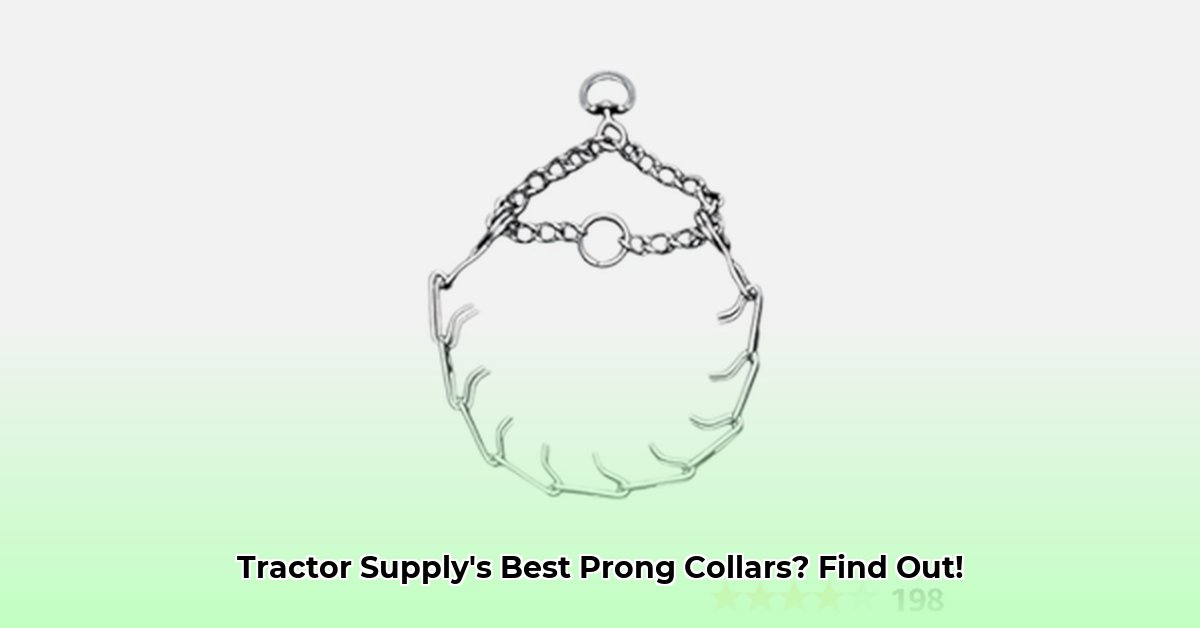
Understanding Prong Collars: More Than Just Metal
A prong collar (a chain collar with blunt metal prongs instead of links) applies pressure to a dog's neck when the leash is tugged. Unlike a choke chain, which constricts the throat, a prong collar distributes pressure more evenly. This can make it a more humane correction method if used correctly, but misuse can cause problems. For more information on prong collars from Tractor Supply, check out this helpful resource.
Why Some Owners Choose Prong Collars
Some dogs are strong-willed, and traditional collars or harnesses provide insufficient control. A prong collar's immediate feedback – the slight pressure when pulling – can interrupt unwanted behaviors. It's a firm "whoa," helping dogs understand consequences. But it's a tool, not a magic solution, and requires proper usage within a broader training plan. Isn't it crucial to choose the right tool for effective, humane training?
Selecting the Right Prong Collar at Tractor Supply: Size Matters
Tractor Supply offers various prong collars. Correct sizing is crucial for comfort and effectiveness.
Consider these factors:
- Dog's Size and Breed: A collar too loose is ineffective; one too tight is cruel. Measure your dog's neck and follow the manufacturer's guidelines. A Greyhound needs a different collar than a Bulldog.
- Material: Stainless steel is durable and rust-resistant. Avoid cheap materials that might break.
- Number of Prongs: More prongs distribute pressure more evenly, but too many can be harsh. Start with fewer and adjust under professional guidance. How many prongs are ideal for your dog's breed and temperament?
- Chain versus Leather: Leather offers some give, potentially gentler on the neck, but it wears faster than steel.
Responsible Prong Collar Use: A Step-by-Step Approach
Correct usage is key to both effectiveness and your dog's well-being.
Step 1: Consult a Professional. Before using a prong collar, consult a certified dog trainer. They'll assess your dog and teach proper techniques. This increases the chances of success and minimizes the risk of harm. A professional assessment is vital, isn't it?
Step 2: Perfect Fit. Two fingers should fit between the collar and your dog's neck. A tight collar is uncomfortable; a loose one is ineffective. Does your dog show signs of discomfort when wearing the collar?
Step 3: Gentle Corrections. Aim for immediate feedback, not punishment. A quick, gentle tug is usually sufficient. The goal is to guide, not inflict pain.
Step 4: Positive Reinforcement. Combine the prong collar with positive reinforcement (treats, praise, playtime). This creates a balanced, more effective training approach.
Step 5: Constant Supervision. Never leave your dog unsupervised while wearing a prong collar to prevent injury or entanglement.
Alternatives to Prong Collars: Gentler Options
Head halters, flat collars, and harnesses offer gentler alternatives. Some dogs respond better to these methods. Your dog trainer can help you choose the best option. What are the advantages and disadvantages of each alternative collar type?
Making the Right Choice for You and Your Dog
Using a prong collar is a personal decision. Experts have concerns about the potential for injury or ineffectiveness. Weigh the pros and cons carefully, prioritizing your dog's well-being. Professional guidance is strongly recommended. What is the most important factor to consider when choosing a dog training tool?